Showing posts with label cookbooks. Show all posts

Comfort Food From Outside The Comfort Zone - South East Asian Food

Sunday, November 6, 2011

What does 1970s food make you think of? Retro dinner party classics like prawn cocktail and beef wellington, perhaps. The sweet nostalgia of blancmange, peach melba, knickerbocker glory and trifle (always trifle). Pot luck dinners and so-uncool-it-never-goes-out-of-style fondue. Leaving for work or school only after a Proper Cooked Breakfast. More pre-packaging – TV dinners and fish fingers anybody? (didn’t think so...).

Lots of those things have a rather stodgy waft of comfortable familiarity. Some are rib-sticking and hearty and even dishes that once seemed the height of sophistication (devils on horseback and duck a l’orange?) are something to be tucked into and enjoyed, rather than a delicate morsel artfully arranged on a plate.  They can evoke feelings of childhood and a sense of innocent – even naive? – pleasure in food, even in people who didn’t grow up in the 70s. But not all the recipes from back conjure up images of Kath & Kim crossed with Enid Blyton.

South East Asian Food by Rosemary Brissenden

The idea of what was exotic was very different to now. Unless they were part of your native culture, things as simple as espresso, pumpernickel, souvlaki and felafel were curiosities that didn’t lurk on every corner (although 20 odd years later, I used to get funny looks eating pate sandwiches for lunch at school…). Chinese food was likely to begin with spring rolls and end with sweet and sour pork. But some people had a broader frame of reference…

Rosemary Brissenden first visited South East Asia in 1957 when she was a student at Melbourne University. South East Asian cuisine was largely unknown beyond those who’d experienced it first-hand and Australian food at that time was yet to stake out its territory as a global pick-n-mix held together with something of its own. Brissenden set to and wrote South East Asian Food, which was first published in 1969 and was the definitive guide to food from that region.

Over forty years later, a substantial new edition of the book has been released. In the cluttered and growing cookbook market full of next big things and toqued experts, South East Asian Food has become an enduring classic while staying relevant and up to date. It can be described as a seminal work without a trace of hyperbole – an assertion supported by Elizabeth David providing a ringing endorsement on the book’s warm chartreuse cover.
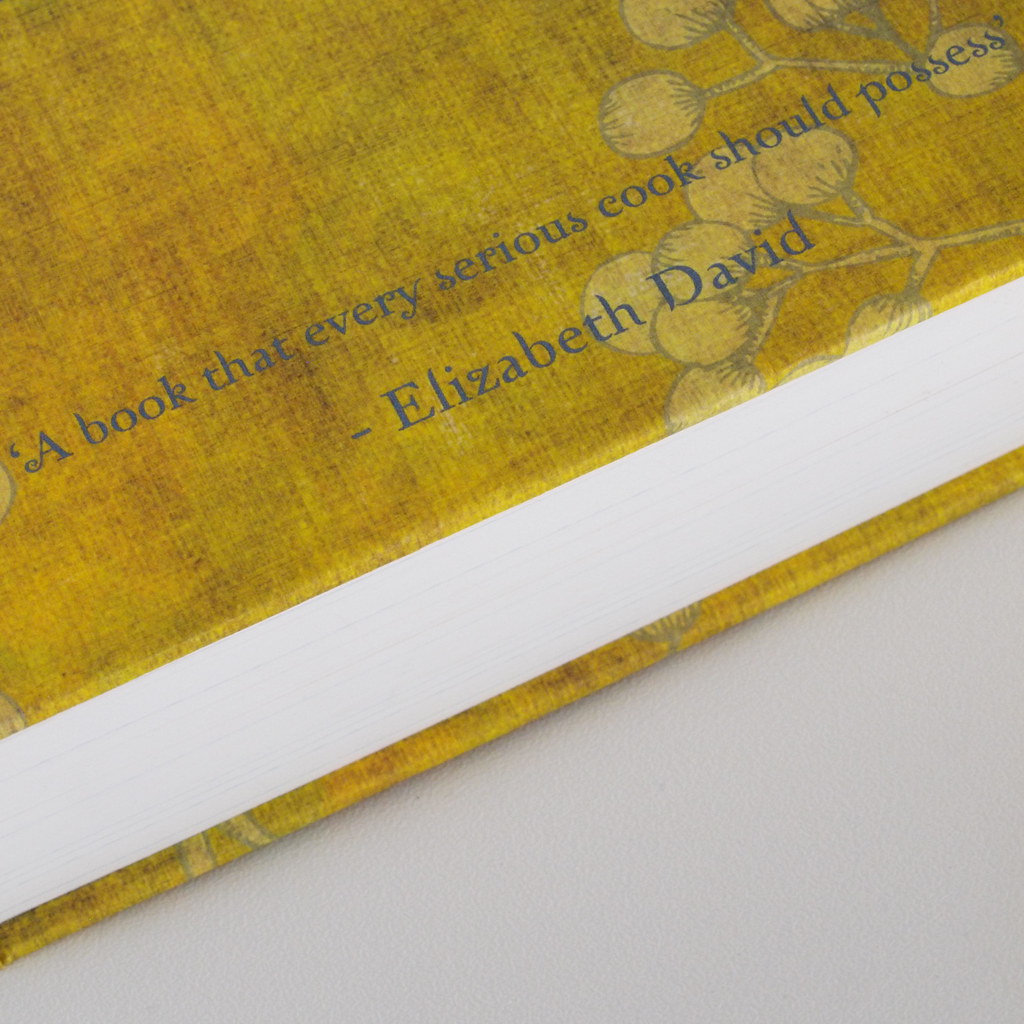
A book that every serious cook should possess - Elizabeth David
"A book that every serious cook should possess" - Elizabeth David"

I first approached South East Asian Food with a degree of caution; its initial impression is of a Book That Means Business. Its heft reminded me of Stephanie Alexander’s The Cook’s Companion which, I learned to my surprise, was only published in 1996.

South East Asian Food isn’t like the majority of modern recipe books. It isn’t a glossy coffee table book designed for show (or showing off) as much as for cooking. Nor is it a magazine-style format to flick lazily through on a weekend afternoon before, with a rumbling tummy, pottering into the kitchen to try out whatever caught your eye. It has more in common with a textbook – investing some time reading carefully and planning your approach will reward you by unlocking flavours that – for me, at least – I’d not imagined being able to recreate at home.
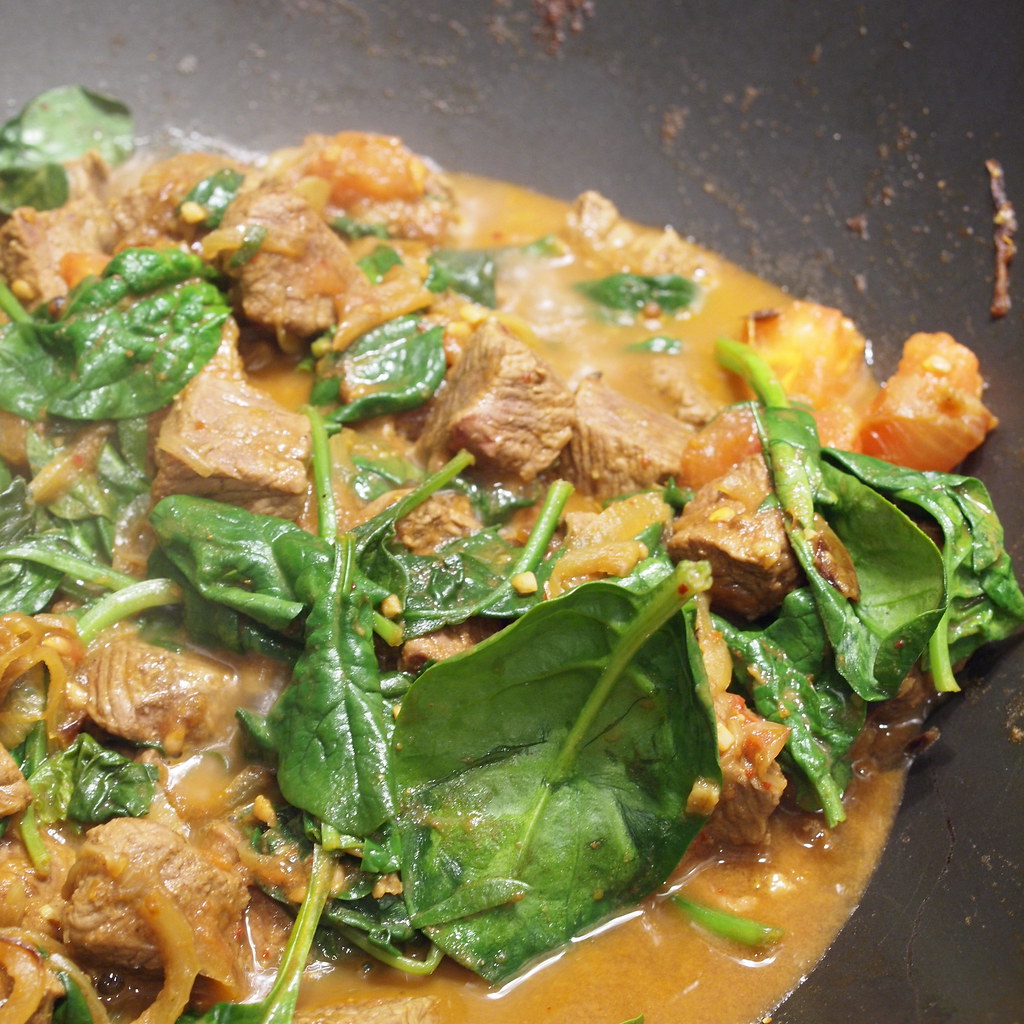

Lamb and spinach curry - it tastes more exotic than it sounds
Lamb and spinach curry - its not-so-exotic name belies its depth of flavour

The book’s authoritativeness and detail could make it initially a bit intimidating for readers who are new to recipes from the region, or who favour cookbooks full of glossy pictures showing the finished product. However, Brissenden is a patient teacher. Her style is instructive and no-nonsense, a little like being taught by a slightly stern but very wise and generous aunty. The instructions are direct and clear, and explain why things are done a certain way (satisfying both my curiosity and my ignorance). A touch of lightness is provided by Daniella Germain’s illustrations (now taking centre stage of their own accord in My Abuela’s Table).
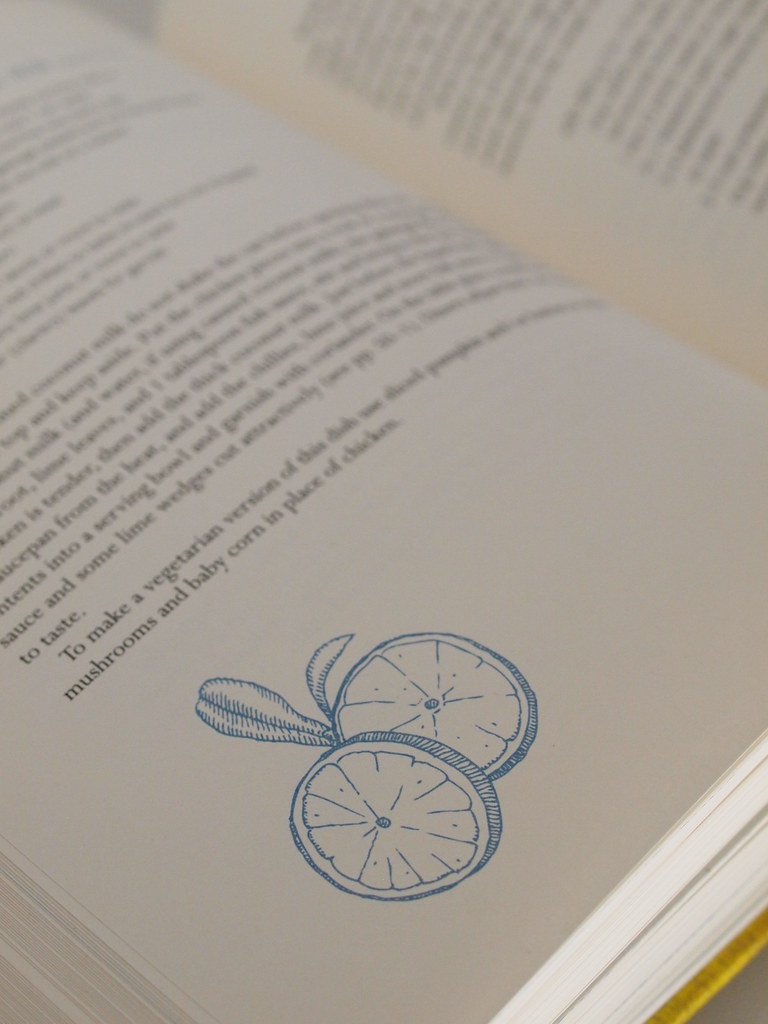
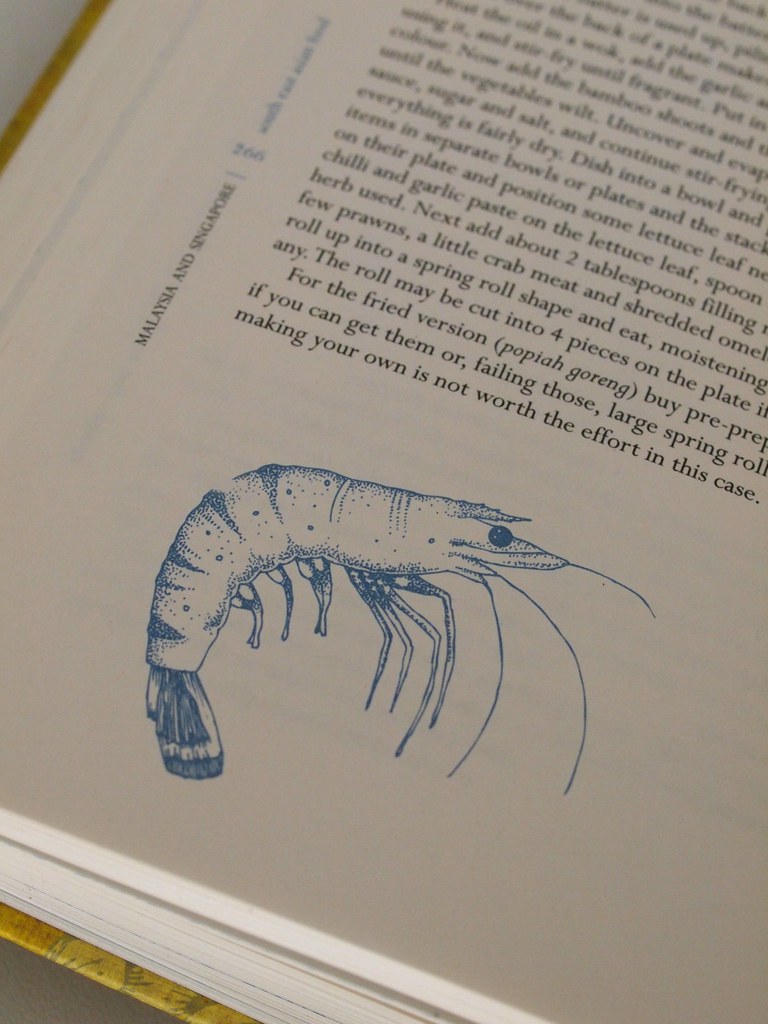
Daniella Germain's illustrations in South East Asian Food
A couple of Daniella Germain's illustrations in South East Asian Food

South East Asian Food traverses a culinary journey from Indonesia to Vietnam, passing through Malaysia, Singapore, Thailand, Laos and Cambodia along the way. The recipes are arranged by country and then into categories – grills and barbecues, braises, fried dishes, curries of almost every sort and persuasion. Brissenden gives an insight into each country’s culinary history and traditions, important ingredients and how meals are served. This follows a meaty introduction to ingredients and techniques, which instructs on everything from ‘making prawns crunchy’ to the uses of fresh coconut and making your own Javanese soya sauce.

If the 1970s are, at first glance, all about comfort food, South East Asian Food took me far outside of my comfort zone. I can safely confess to being a complete novice in relation to cooking Asian food of any variety and most of my experiments tend firmly towards sweet rather than spicy. The first recipe I tried was a lamb and spinach curry from Malaysia, and involved making my own curry powder. The finished dish had a depth of flavour that grew on the Other Penguin and me with each mouthful. It was quite mild, but had a subtle intensity – the freshly made curry powder made a noticeable and refreshing difference. As it turns out, this recipe was comfort food - just perhaps not the kind I'd first think of...

Lamb and spinach curry

Being in such new territory, I tried to minimise my tinkering with the recipe. There were a few items where I used some pre-ground spices because they were what I had to hand, but I was keen to stay true to the instructions to get a good sense of the intended flavours.

The recipe, with my extra notes and comments, is as follows:

Meat Curry Powder
(The quantities below are for a quarter of the recipe shown in the book – the original recipe makes a substantial amount, and I thought it was worth seeing how it tasted before making a giant batch (especially as the Other Penguin has quite a low chilli threshold))

What you need
25 g coriander seeds
8 g cumin seeds (I used ground cumin)
8 g fennel seeds (I used ground fennel seeds)
3 tsp turmeric
1 tsp black peppercorns
9 dried chillies (or more to taste – even twice as many if you like it hot…)

What to do
1.     Roast the coriander seeds, cumin seeds, fennel seeds and turmeric lightly in a dry pan for around a minute and a half.
2.     Remove the spices from the heat and place in a mortar or the bowl of a small food processor (I used the attachment for a stick blender), add the peppercorns and dried chillies and whizz (or grind with a pestle) to a powder. 

Making lamb and spinach curry


Lamb and Spinach Curry

What you need

1 tbsp grapeseed oil (the recipe uses ghee or other vegetable oil)
1 large brown onion, cut in half across and then sliced finely
1 cardamom pod, broken open
1 cinnamon stick
2 cloves of garlic, peeled, smashed and chopped finely
1 tbsp meat curry powder, from the recipe above
500 g very lean lamb, cut into 2 cm cubes (I used two lamb backstraps, which felt a little extravagant, but gave a tender and juicy result)
2 tomatoes, skinned and chopped or 2 tbsp yogurt (I used half a tin of peeled plum tomatoes, roughly chopped, and opted to not include yogurt)
Salt to taste
1 packet (which is a mysteriously unspecified quantity) of frozen spinach, or 500 g fresh spinach (I used 150 g of fresh baby spinach – a bit more would’ve been good, but my local shop was running out in a big way… terrible excuse, I know!)
A little chopped mint (optional, and I can’t stand it, so I left this out)
Pinch of ground cumin
1 tsp garam masala, or to taste (I also left this out as, having been positive there was some in the cupboard, I discovered I was mistaken – gah!)

What to do
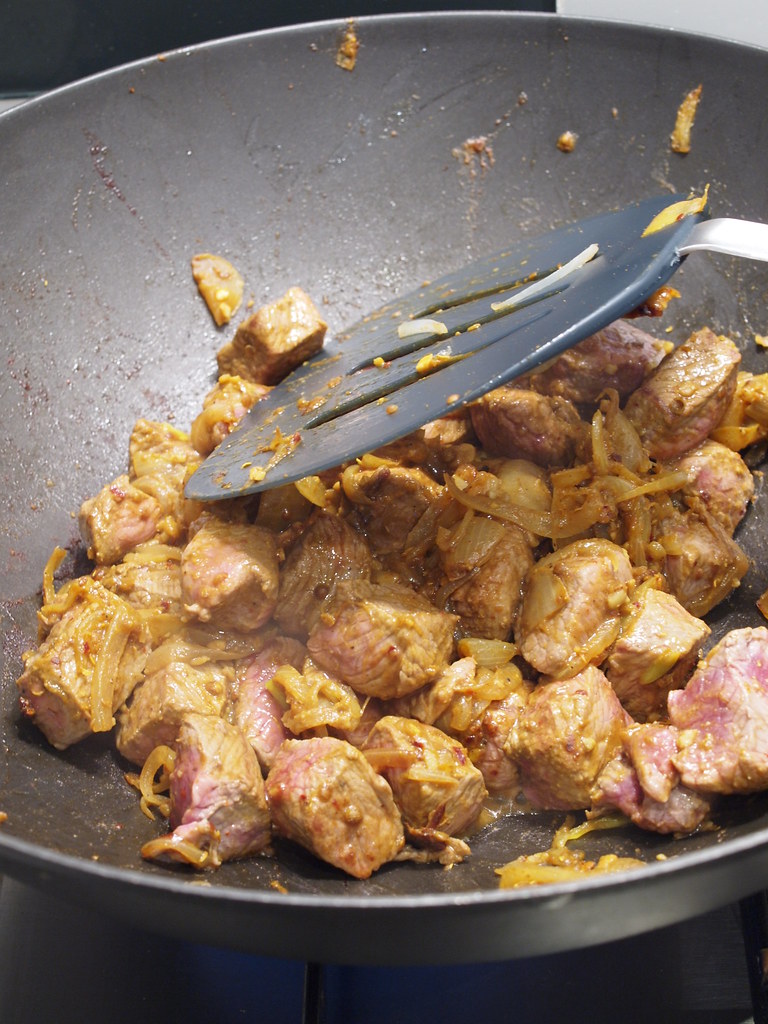
1.     Heat the oil (or ghee) in a pan. Add the onion, cardamom and cinnamon, and fry until the onion is deep golden (and enticing smells have suffused the kitchen).
2.     Mix the garlic and curry powder with a little water (to add enough moisture for it not to burn) and add with the lamb to the pan. Stir well to combine.
3.     Cook, stirring occasionally, until the meat is browned all over and the spices smell “cooked and fragrant”. (The scent develops a bit more complexity as this happens).
4.     Add the tomatoes or yogurt and stir well. Check for seasoning, and add salt if needed. Then, add the spinach, a splash of water if the consistency is getting a little dry. Add the mint now, too, if using it.
5.     Simmer until the meat is cooked through and the sauce and flavours are smooth. Add the cumin and garam masala before serving.

Served with jasmine rice, the recipe serves two for dinner, with enough leftovers for two (or one very hungry Other Penguin) for lunch.

Lamb and spinach curry from South East Asian Food

There are lots of other recipes I’m keen to try out in South East Asian Food after such a successful first experience. Some of these are…

- Ayam Semur Jawa (chicken in soya sauce)
- Dadar Jawa (Javanese omelette)
- Abon Daging (tasty meat floss… I’ve seen pork floss rolls in Chinese bakeries and am intrigued by the idea of trying to make meat floss – this one is an Indonesian recipe)
- Hainanese Chicken Rice
- Roti Canai (because I’ve read so much about it on other food blogs!)
- Khao Tom Kai (chicken rice porridge)
- Bubur Ketan Hitam (black rice pudding – because desserts are thin on the ground in this book, so I’d love to try at least one of those that are included)

South East Asian Food - a few desserts
A few more desserts - though I'd love to learn more about making Asian sweet treats

Brissenden explains that desserts “are few because main meals in South East Asia traditionally do not include them. Sweets are usually enjoyed as snacks and between-meal indulgences and warrant a book of their own”. Now there’s something to wish for…

Read more...

Unexpected Sweetness – Sticky Date Cake

Sunday, June 19, 2011

Do shiny new recipe books follow you home like wayward kittens and creep into every room of the house until they reach such epic proportions that they threaten to fall with a terrible splat! into a bowl of cake batter*? Or is that just around this neck of the woods? My name is Sticky Penguin and I’m addicted to cookbooks.
The Other Penguin has taken evasive action in an effort to slow the arrival of further cookbooks (realising that stopping them entirely is likely to be like trying to bail out the QE2 with a tea cup). He arrived home last week with two glossy books of desserts borrowed from the library. A quiet evening of reading and gluttonously plotting baking efforts followed...

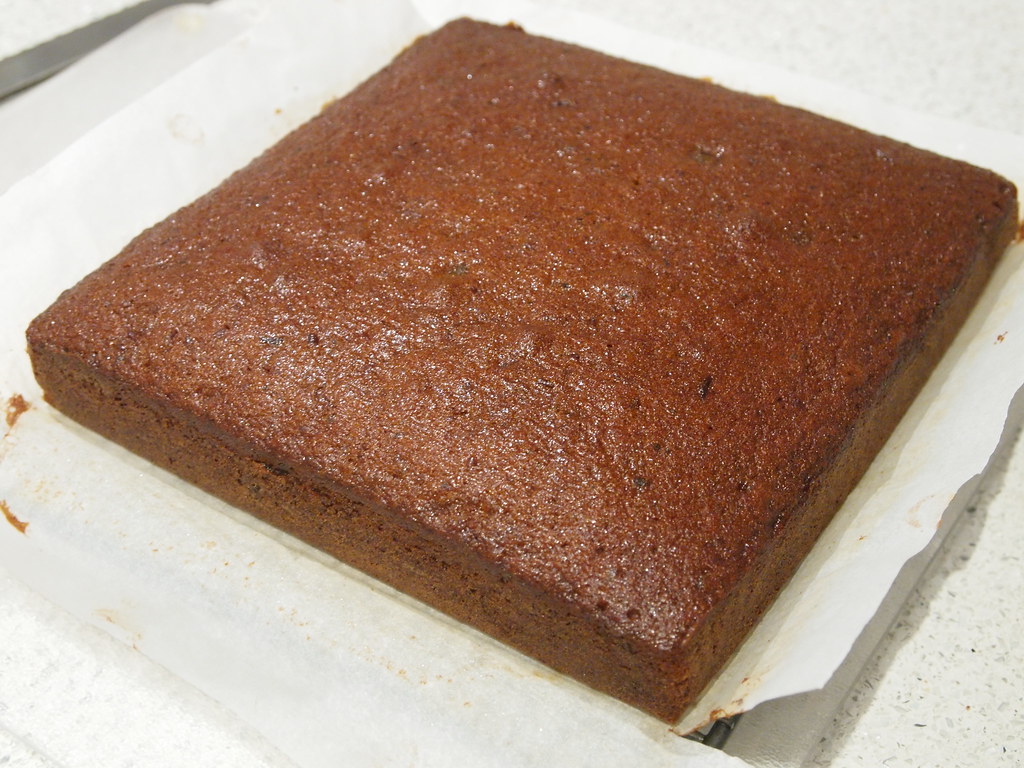
Sticky Date Cake, made by the Sticky Penguin from The Sweet Life: Desserts from Chanterelle, by Kate Zuckerman

The first of the books was The Sweet Life. Not to be confused with The Sweet Life In Paris, David Lebovitz’s love affair with Paris that guided so much delicious pootling around that city last year, this is a book of desserts by Kate Zuckerman, the former pastry chef at Chanterelle in New York. Sadly, after going in search of the restaurant online in anticipation of trying some of their sweet offerings for myself, I found that after 30 years in business and being among the first wave of fine dining destinations in TriBeCa, Chanterelle had fallen foul of the financial meltdown and closed in 2009.

Zuckerman was named in 2005 as one of the ten best US pastry chefs by Pastry Art & Design and Chocolatier magazines (now combined into Dessert Professional). So she knows her onions. Or perhaps that should be her quinces. And tarts. And chocolate... Best of all, she’s keen to share her knowledge along with her creations. The Sweet Life mixes the how-to of essential dessert basics – browning butter, making caramel, even simply creaming butter and sugar – with recipes applying those skills along with a handful of variations to inspire you to venture into new territory for yourself.

Sticky Date Cake, made by the Sticky Penguin from The Sweet Life: Desserts from Chanterelle, by Kate Zuckerman

Many high-profile chefs can be all about personality, whether bubbling with butter and slapdash enthusiasm or instructing with haughty precision. Zuckerman, while leaving you in no doubt of her passion, has a pleasantly conversational tone. She offers the helpful guidance of an experienced mentor standing beside the kitchen bench, ready to let you try to scale new heights but ready with advice before you bite off more than you can chew.

Some people might find the frequent cross references to tips and techniques on other pages of the book an unwelcome distraction. However, I liked that these were largely for extra information, with the method for each recipe all found in one place so avoided the need to flick back and forth with floury hands or at crucial moments. Notes explaining the science underlying the method (written with the input of Kirsten Hubbard, a food scientist) are also a useful resource for those, like me, whose baking experiments begin with “I wonder what would happen if...”.

Sticky Date Cake, made by the Sticky Penguin from The Sweet Life: Desserts from Chanterelle, by Kate Zuckerman

The book is grouped into chapters by type of dessert that run the gamut from tarts to ice creams and candies. There are quick options for a last-minute dessert or a rainy afternoon (flourless chocolate bête noir, strawberry-rhubarb crisp), approachable challenges (chocolate caramel tart, prune armagnac creme brûlée) and stand-out-show-off showpieces (cardamom and honey pistachio nougat glacé). Tina Rupp’s photography shows off the detail of a selection of Zuckerman’s recipes – although, for those who use the photo rather than the ingredients to make their selection, be warned that not all of the recipes are illustrated.

In an ever-more-crowded field of dessert cookbooks, The Sweet Life is a valuable guide for those eager to learn new techniques as well as expanding their repertoire.

Sticky Date Cake, made by the Sticky Penguin from The Sweet Life: Desserts from Chanterelle, by Kate Zuckerman

Trying to decide where to begin in testing out some recipes, the Date Cake with Toffee Sauce looked like the perfect way to use up a bag of fresh Medjool dates lurking neglectedly at the bottom of the fridge. While the recipe wasn’t a difficult one, I was interested in applying the guidance on effectively creaming butter and sugar to achieve a light consistency and the highly liquid cake batter was a way to put my newly repaired oven** to the test.

The recipe, with metric conversions and my extra notes and comments, is as follows:

Date Cake from The Sweet Life: Desserts from Chanterelle
What you need
255 g / 9 oz fresh dates (I used around 15 Medjool dates)
2 tbsp brandy (the recipe also suggests you could use Grand Marnier)
2 tsp instant espresso powder
170 g / 6 oz / 12 tbsp butter, at room temperature
175 g / 1 cup soft brown sugar (references to cups are US cups, not metric)
4 eggs, at room temperature
220 g / 1¾ cups plain flour
1/8 tsp ground cloves
1/8 tsp ground nutmeg
¼ tsp cinnamon
½ tsp salt
 tsp bicarbonate of soda (baking soda)

What to do
1. Preheat the oven to 160°C (325°F). 
2. Line a 23 cm (9 inch) square cake tin with baking paper.
3. Halve the dates and remove the pits. Place the dates in a mixing bowl and add the brandy and espresso powder. Add 240 ml (1 cup) of boiling water to the bowl and allow the mixture to steep for 10 minutes.
4. Puree the date mixture in a food processor (or you could use a resilient stick blender, or a stand mixer) - it doesn't have to be completely smooth.
5. Cream the butter for 1 minute in a stand mixer, then add the sugar and continue creaming for another 6 to 8 minutes, until the mixture is light, fluffy and pale. Stop periodically to scrape down the sides of the bowl.
6. Add the eggs, one at a time, and mix on low speed for around 20 seconds after each one. If it starts to look curdled, don't worry about it - it will balance out when the dry ingredients are added. 
7. In a separate bowl, sieve together the flour, clove, nutmeg, cinnamon and salt. Don't add the bicarb soda yet - just in case you were going to plonk in all the dry ingredients, and then go 'bugger' after going back to the recipe (which didn't happen this time...). With the mixer on slow speed, and half the flour mixture to the butter, sugar and eggs.
8. Add the bicarb soda to the date mixture and stir for around 10 seconds. 
9. Keeping the mixer on slow, add the date mixture to the cake batter and incorporate thoroughly. Then, add the remaining half of the flour and spices and mix until combined and no floury streaks remain. Scrape down the bowl, then mix on slow speed for 30 seconds.
10. Pour the batter into the lined tin, and level the top with a spoon or spatula. It's a very runny batter before being baked, just in case you look at it and wonder how it's going to turn into a cake (or is it just me that has those worries, borne of the until-now dodgy oven?). Bake on the centre shelf of the oven, for 45 minutes to 1 hour, until the centre of the cake is set when tested with a thin skewer. My cake was done after 48 minutes. Allow to cool in the cake tin, then turn out onto a wire rack.
Note: The recipe book suggests serving the cake with warm toffee sauce, although I think it would be wonderful with custard. A coffee ganache could also be interesting to try. I was taking the cake to share at work, so kept it plain (a sticky cake is so much trickier in that setting), and just sprinkled it lightly with icing sugar. 

Sticky Date Cake, made by the Sticky Penguin from The Sweet Life: Desserts from Chanterelle, by Kate Zuckerman
The novelty of an evenly baked cake after a newly fixed oven

The finished cake was the beautiful dark golden colour of a jar of treacle held up to the light. The coffee and brandy introduced deeper, subtler flavours than found in the sticky date cakes and toffee puddings on cafe menus from Double Bay to Dungog. It had a light, almost springy texture. While lovely and moist, no hint of its runny incarnation prior to baking remained. Also, to my enormous delight, the cake rose gently and evenly. Perhaps to truly experience the joy of a functional oven, you need to have suffered five years of grappling with a disgruntled Smeg.

If all new baking efforts turned out as well as the Sticky Date Cake, it would be a sweet life indeed...

Sticky Date Cake, made by the Sticky Penguin from The Sweet Life: Desserts from Chanterelle, by Kate Zuckerman

* And I do mean the recipe books here, not the kittens. Although I’d be so happy to have a kitten that I mightn’t mind too much having to wrangle a squirming, biting one in a bowl of soapy water to clean up the result of the splat!
** For those of you familiar with the trials of the Evil Smeg, it has lately had its thermostat replaced, causing great joy and rejoicing in one half of the penguin household, and a welcome break from (quite so many) dark mutterings from the kitchen in the other half.

Read more...

  © Blogger template "Shush" by Ourblogtemplates.com 2009, changed to bits and pieces by the Sticky Penguin